- HOME
- THE SOURDOUGH JOURNAL
- SOURDOUGH STARTER
- Building Your First Sourdough Starter
- SOURDOUGH BREAD
- Your First Sourdough Loaf
- Jalapeño Cheddar Sourdough Loaf
- Roasted Garlic & Parmesan Sourdough
- SOURDOUGH SWEET BAKES
- SOURDOUGH DISCARD
- PIZZA & FOCACCIA
- SLOW MORNINGS BREAKFAST & BRUNCH
- HOW TO FEED YOUR SOURDOUGH STARTER
- HOW TO KNOW WHEN YOUR STARTER IS READY
- HOW TO MAINTAIN YOUR STARTER
- HOW TO STORE YOUR SOURDOUGH STARTER
- HOW TO REVIVE YOUR SOURDOUGH STARTER
- COMING SOON

Roasted Garlic & Parmesan Sourdough
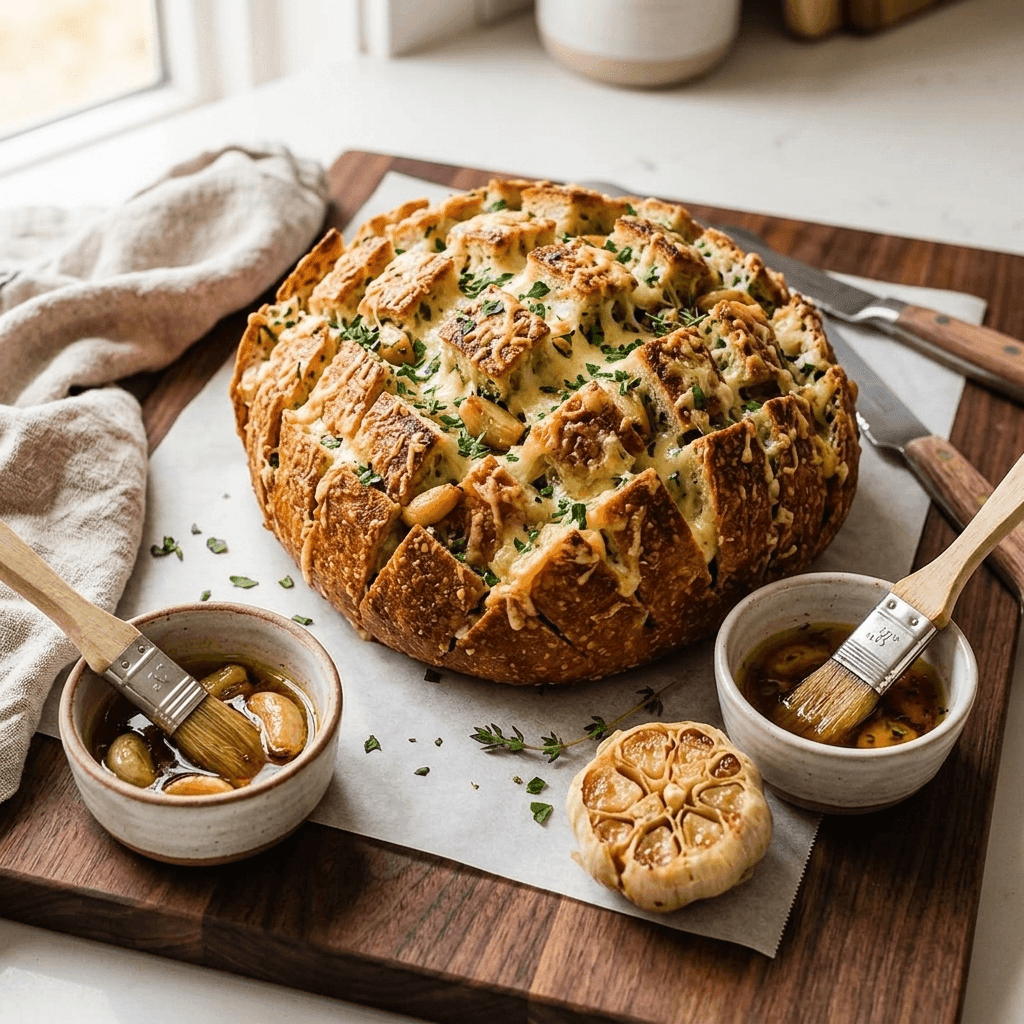
Slow-roasted garlic, nutty Parmesan, and a beautifully golden crust come together in a loaf that is deeply savory, aromatic, and made for sharing.
At a Glance
Makes: 1 loaf
Active time: About 45 minutes
Bulk fermentation: About 6–10 hours
Cold proof: 8–16 hours
Bake: About 45–50 minutes
Roasted garlic is particularly well suited to sourdough because its mellow flavor adds richness without the intensity of raw garlic. Dedicated roasted-garlic Parmesan sourdough recipes use the same combination with an overnight fermentation and Dutch-oven bake.
INGREDIENTS
The Dough
100 g active sourdough starter
350 g water
450 g bread flour
50 g whole wheat flour
10 g fine sea salt
15 g extra-virgin olive oil
The Roasted Garlic
1 whole head of garlic
1 teaspoon olive oil
Small pinch of sea salt
The Parmesan
80 g freshly grated Parmesan
20 g additional Parmesan, finely grated, for finishing
Roasted garlic is particularly well suited to sourdough because its mellow flavor adds richness without the intensity of raw garlic. Dedicated roasted-garlic Parmesan sourdough recipes use the same combination with an overnight fermentation and Dutch-oven bake.

Roast the Garlic
Heat the oven to 200°C / 400°F.
Slice the top from the head of garlic to expose the cloves.
Place it on a small sheet of foil, drizzle with olive oil, and add a small pinch of salt.
Wrap loosely and roast for approximately 40–45 minutes, until the cloves are soft, golden, and fragrant.
Let the garlic cool completely.
Then gently squeeze the roasted cloves from their skins.
Set aside.

Make the Dough
Add the starter, water, and olive oil to a large bowl.
Stir to combine.
Add the bread flour and whole wheat flour and mix until no dry flour remains.
Cover and rest for 30 minutes.
Add the salt and gently work it through the dough.
The dough should feel soft, supple, and slightly tacky.
Build the Dough
Over the next 2 hours, complete 4 sets of stretch-and-folds, approximately 30 minutes apart.
After the first set, gently work in approximately half of the roasted garlic and half of the Parmesan.
Add the remainder during the next fold.
Work gently.
The roasted garlic is soft and delicate, and you want pockets of it throughout the loaf rather than turning the entire dough into a paste.
By the final fold, the dough should feel smoother, stronger, and noticeably more elastic.

Let It Rise
Cover and leave the dough somewhere comfortably warm.
Allow it to bulk ferment until it has increased by roughly 50–75%.
Look for:
A smoother surface
Visible bubbles
A lighter, aerated texture
A gentle jiggle when the bowl is moved
This may take approximately 6–10 hours, depending on your starter and kitchen.
Shape
Lightly flour your work surface.
Turn the dough out gently.
Shape it into a loose round and let it rest for 20–30 minutes.
Shape again, creating good surface tension across the outside of the dough.
Place the loaf seam-side up into your prepared banneton.
Cover and refrigerate for 8–16 hours.
Score & Bake
Preheat your Dutch oven at 250°C / 480°F for at least 30–45 minutes.
Take the dough directly from the refrigerator.
Turn it onto parchment and score with your SAYMORA bread lame.
Carefully transfer it to the hot Dutch oven.
Bake:
25–30 minutes covered
Remove the lid and reduce the oven to:
220°C / 425°F
Continue baking for 15–20 minutes, until deeply golden.
During the final 5 minutes, sprinkle the remaining Parmesan over the top.
Let it become beautifully golden and crisp.

Let It Rest
Move the loaf to a cooling rack.
Let it cool for at least 1 hour before slicing.
The aroma will make this difficult.
The first slice will make it worth it.

A Few Things to Know
Roast the garlic until completely soft. You want sweet, mellow cloves rather than sharp garlic.
Let the garlic cool before adding it. Warm ingredients can interfere with fermentation.
Freshly grated Parmesan works best. It melts and incorporates more naturally than pre-shredded cheese.
Don't overload the dough. Too much garlic or cheese can weigh down the loaf and make shaping more difficult.
FAQ
Can I use pre-roasted garlic?
Yes, provided it is fully cooled and not overly oily.
Can I use Parmesan cheese from a container?
You can, but freshly grated Parmesan gives better flavor and texture, particularly for the Parmesan crust.
Can I add herbs?
Absolutely. Rosemary, thyme, or a little fresh parsley would work beautifully. Keep the quantity modest so the garlic and Parmesan remain the focus.
Why did my loaf spread?
The most common causes are over-fermentation or insufficient dough strength. Make sure you complete the stretch-and-folds and shape the dough firmly enough to create surface tension.